
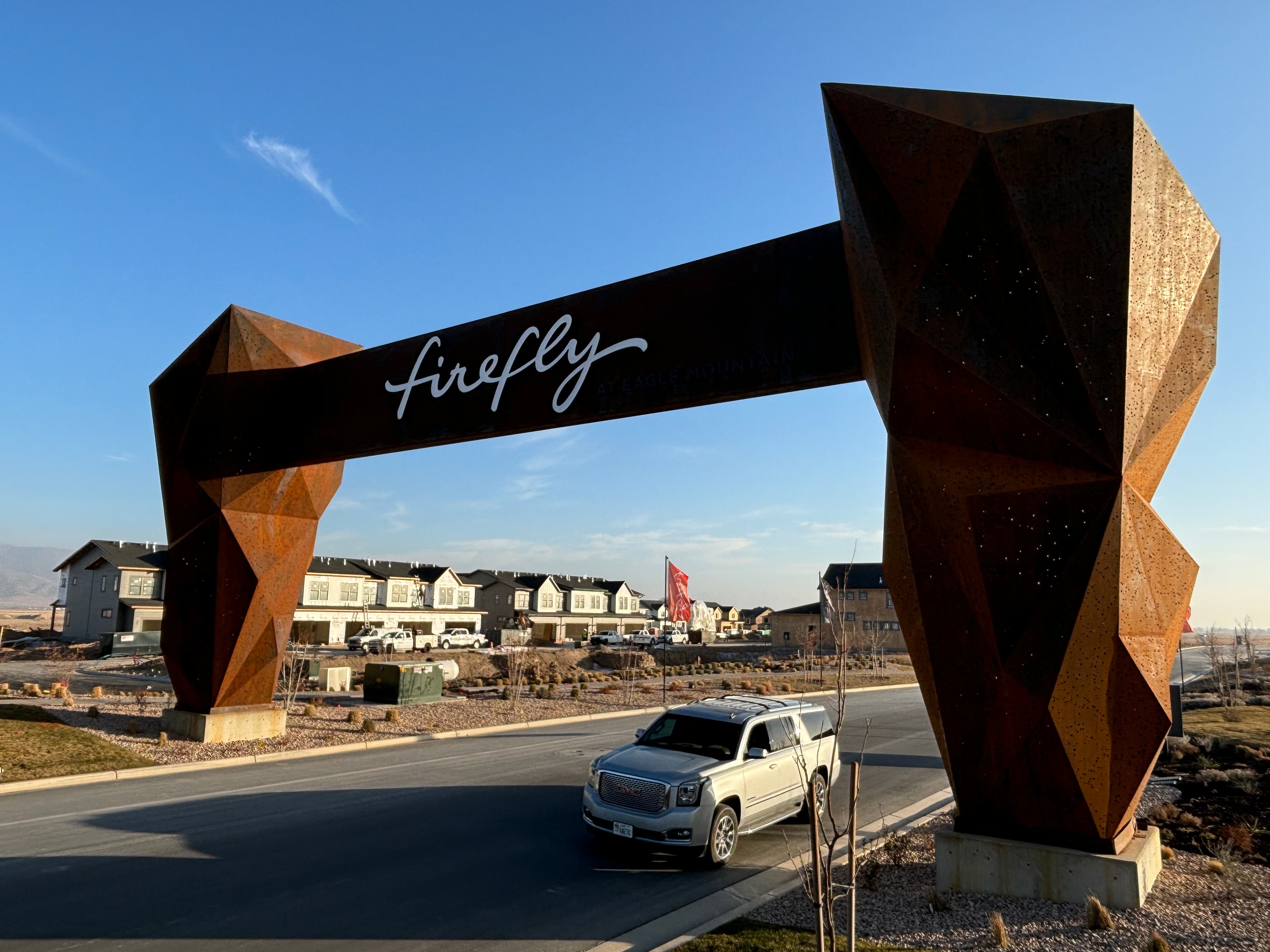
The words "miscellaneous metals" appear on nearly every commercial construction bid in Utah.
Most people on the project team — GCs, owners, architects, project managers — have a general sense of what it means. But when pressed for a precise definition, most cannot give one.
That gap creates real problems. Scoping errors at bid time. Missed coordination between trades. Items that fall through the cracks between the structural steel contractor and the misc metals contractor. Budget surprises during construction.
This guide explains exactly what miscellaneous metals is, what a miscellaneous metals contractor actually builds, how the trade differs from structural steel and general welding, and what it takes to perform this work correctly on commercial projects in Utah.
If you work in commercial construction in Utah, this is worth understanding completely.
1. The Formal Definition — and Why It Matters
Miscellaneous metals is a defined trade classification within the construction industry's standard specification system.
Under CSI MasterFormat, the primary framework used to organize construction specifications, metals work falls within Division 05. The relevant sections include:
- 05 10 00 — Structural Metal Framing (structural steel)
- 05 50 00 — Metal Fabrications (the core of miscellaneous metals)
- 05 51 00 — Metal Stairs
- 05 52 00 — Pipe and Tube Railings
- 05 53 00 — Metal Gratings
- 05 73 00 — Decorative Metal Railings
In practice, "miscellaneous metals" is a catch-all term used on bid documents and scopes of work to describe fabricated metal components that are not part of the primary structural frame.
Why does the formal definition matter? Because when a GC writes "miscellaneous metals" on a bid scope, different fabricators may interpret that differently. A clear understanding of what the term covers — and what it does not — prevents gaps and disputes over scope ownership during construction.
If the scope is not defined precisely, someone always ends up holding an item no one priced.
2. What a Miscellaneous Metals Contractor Actually Builds
The scope of a miscellaneous metals contractor on a commercial project is broader than most people realize.
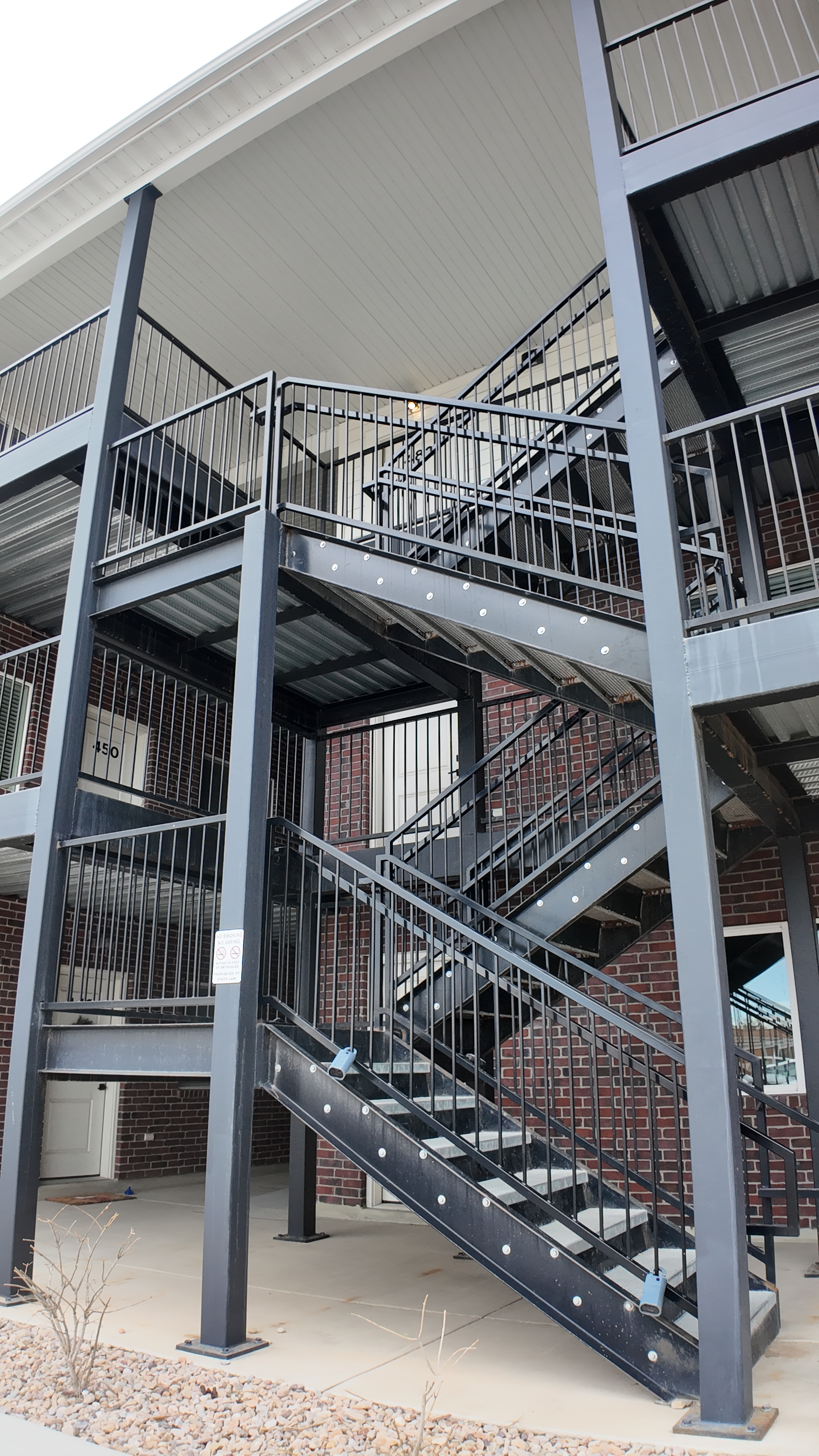
Stairs
- Egress stairs (IBC-compliant, with full structural stringers and connections)
- Architectural stairs (feature stairs, open-riser, floating tread configurations)
- Industrial stairs (shop access, mezzanine access, rooftop access)
- Ships ladders and alternating-tread devices
Railings and guardrails
- Pipe and tube guardrails
- Cable railing systems
- Glass infill railing systems
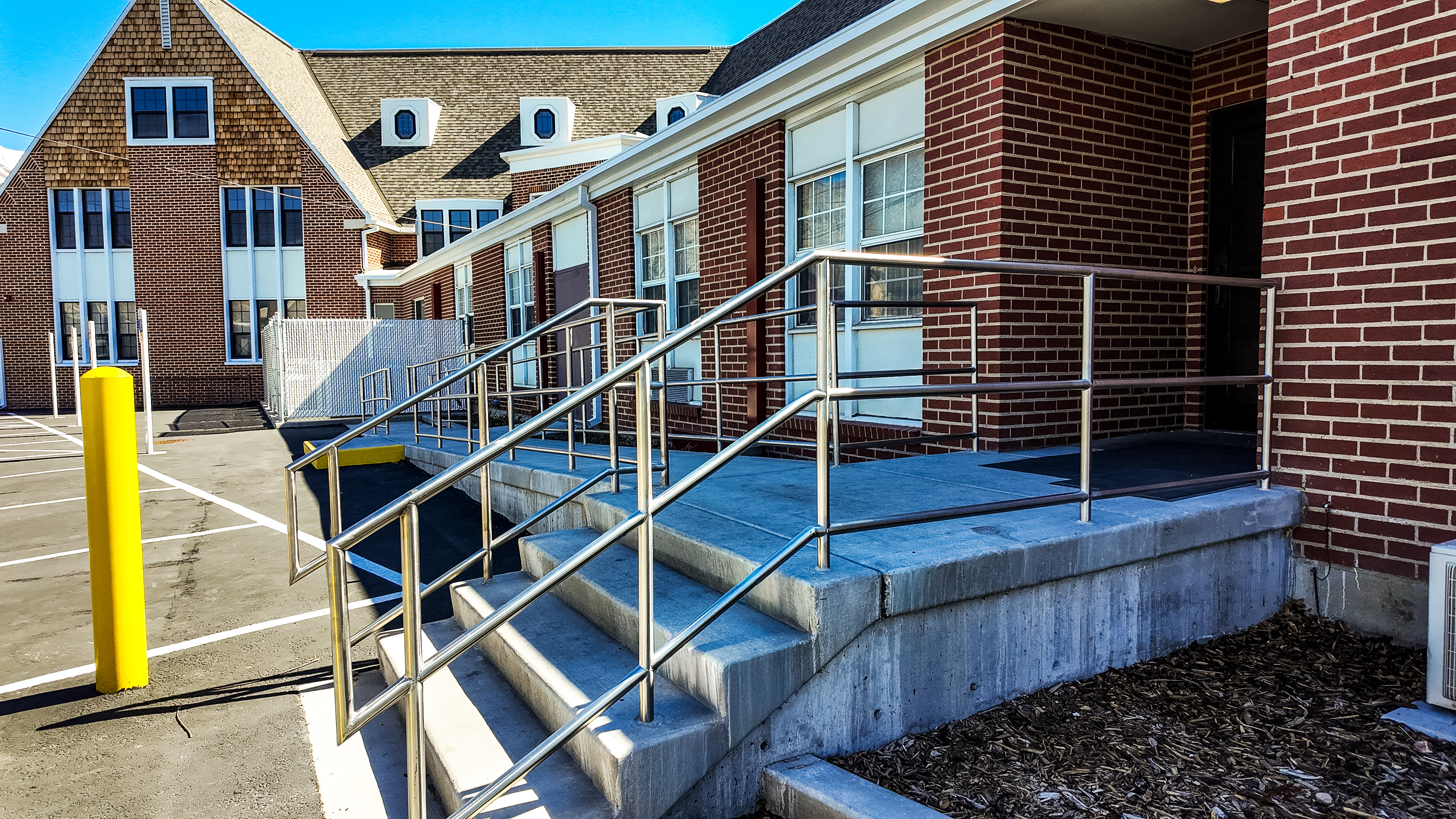
- Stainless steel railings
- Architectural decorative railings
- ADA-compliant handrails
Platforms and elevated structures
- Mezzanines and work platforms
- Catwalks and equipment walkways
- Roof access platforms
- Equipment support structures
Embedded and connection hardware
- Embed plates cast into concrete
- Anchor bolt assemblies
- Custom weld plates and clips
- Ledger angles and shelf plates
Floor and surface products
- Bar grating and floor grating
- Checker plate flooring
- Stair nosings and edge trim
Architectural and custom steel
- Steel canopies and sunshades
- Feature walls and steel panel systems
- Custom frames and surrounds
- Structural brackets and custom connections
- Bollards and security barriers
On a typical Utah commercial project — a multifamily building, office tenant improvement, or mixed-use development — the miscellaneous metals scope can represent a significant portion of the finish-critical path work.
3. How Miscellaneous Metals Differs from Structural Steel
This is the most common point of confusion on commercial projects.
Structural steel and miscellaneous metals are both steel. Both require fabrication. Both show up in Division 05. But they are performed by different contractors, governed by different specifications, and occupy different positions in the construction schedule.
Structural steel
- The primary load-bearing frame of the building
- Wide flange beams, columns, moment connections, braced frames
- Fabricated and erected by a structural steel contractor
- Governed by AISC standards and the project's structural engineer of record
- Installed early in the construction sequence, before most other trades
Miscellaneous metals
- Components that attach to, complete, or finish around the structural frame
- Stairs, railings, platforms, embeds, architectural elements
- Fabricated and installed by a miscellaneous metals contractor
- Governed by IBC, AWS D1.1, and project specifications
- Installed mid-to-late in the construction sequence, after structure and rough framing
The simplest way to think about it: structural steel holds the building up. Miscellaneous metals makes the building usable and code-compliant.
4. How a Miscellaneous Metals Contractor Differs from a General Welding Shop
This distinction matters when you are sourcing the work.
A general welding shop can join metal. A miscellaneous metals contractor can build to construction documents — and that is a fundamentally different capability.
What a general welding shop does
- Fabricates custom metal components from customer-supplied dimensions or sketches
- Performs repair welding, custom fabrication, and small-run manufacturing
- Typically does not engage with construction documents, submittals, or code compliance
- Rarely provides installation services on commercial construction sites
What a miscellaneous metals contractor does
- Reads and coordinates with architectural, structural, and MEP drawings
- Produces complete shop drawings and submittal packages for architect and engineer review
- Manages RFI coordination with the GC and design team
- Fabricates to AWS D1.1 and project specification requirements
- Self-performs or coordinates installation on the construction site
- Coordinates special inspection and weld documentation as required by the IBC
- Manages coating, delivery, and installation sequencing within the GC's schedule
A welding shop that has never worked from construction documents will struggle on a commercial project. The issue is not welding skill — it is process capability.
On a commercial project, the weld is the last five percent of the work. The other ninety-five percent is drawings, coordination, code compliance, and schedule management.
5. The Shop Drawing and Detailing Process
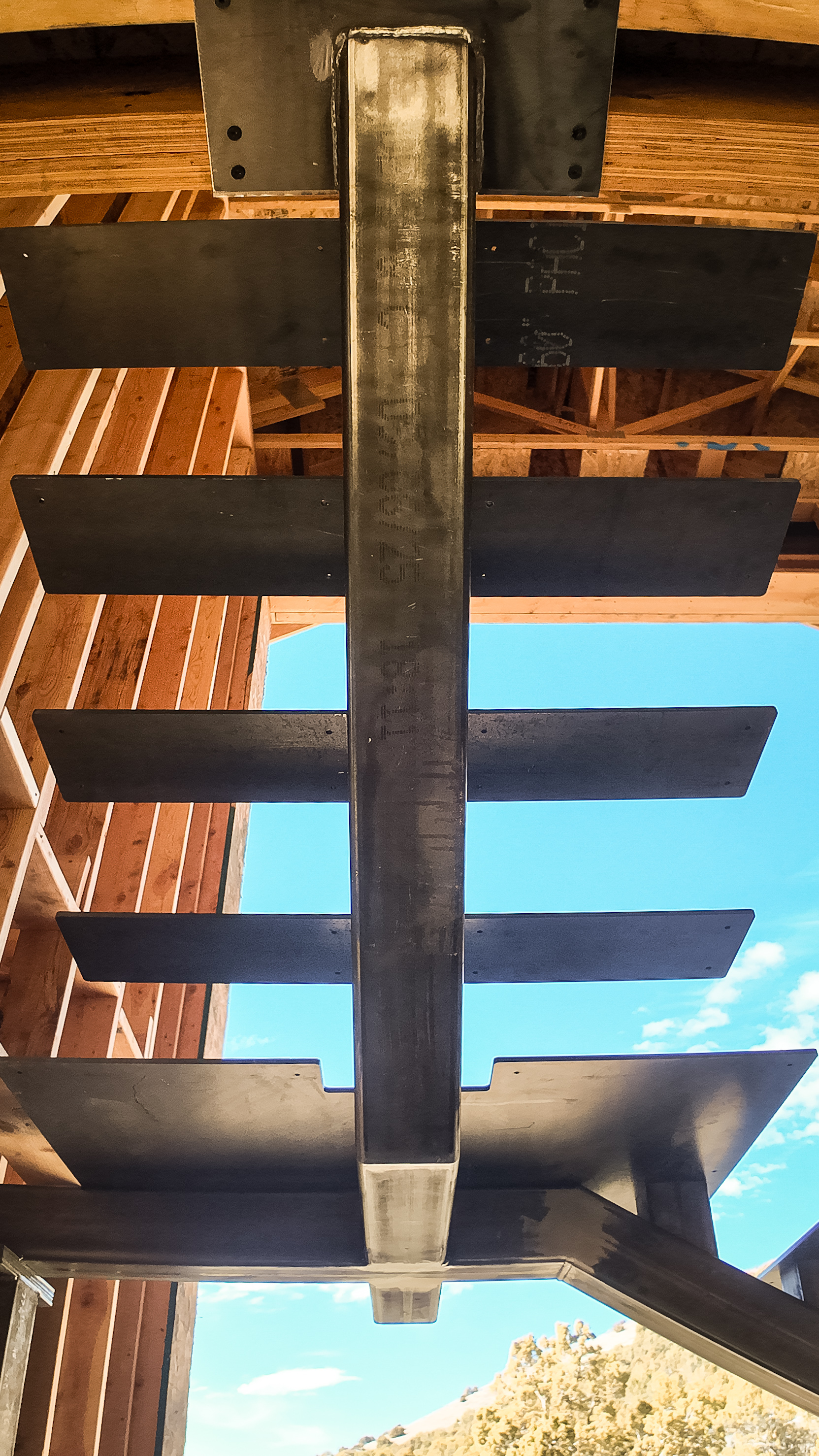
On every commercial miscellaneous metals scope, fabrication begins with shop drawings — not with steel.
Shop drawings translate the architect's design intent and the structural engineer's connection requirements into fabrication geometry. They show every weld location, every member size, every connection detail, every finish specification, and every dimensional reference to the building.
What a complete submittal package includes
- Plan views, elevations, and sections for each fabricated component
- Connection details coordinated with the structural engineer
- Material callouts and finish specifications
- Anchor bolt and embed coordination drawings
- Reference to applicable codes and standards
The review cycle
Once submitted, the architect and engineer review the drawings and return them as approved, approved-as-noted, or revise-and-resubmit. This process typically requires one to two weeks per cycle.
A qualified fabricator submits complete, coordinated drawings on the first cycle. Incomplete submittals burn review time and delay the fabrication start date.
Every week lost in submittal review is a week taken from fabrication. On a tight schedule, that math compounds quickly.
3D modeling before detailing
The most capable miscellaneous metals contractors model in 3D before producing 2D shop drawings. This catches interferences, verifies clearances, and confirms geometry before anything is committed to paper.
3D modeling is especially valuable on complex stair geometry, multilevel railing layouts, and renovation projects where existing conditions must be incorporated.
6. Weld Quality, Certifications, and Inspection
Commercial miscellaneous metals work is governed by the AWS D1.1 Structural Welding Code — Steel.
D1.1 establishes requirements for welder qualification, procedure qualification, inspection, and documentation. On commercial projects where the steel is structural — stair stringers, guardrail post bases, mezzanine connections — these requirements are enforced through the project's special inspection program.
Welder certification
- Welders must be qualified to perform the specific weld types required by the project
- Qualification records must be current and available for review
- A lapse in qualification means the welder must re-test before performing structural welds
Certified Welding Inspector (CWI)
On projects requiring special inspection, a CWI must observe and document welding operations. The CWI verifies that welds are being performed in accordance with the qualified procedure and the project specifications.
Not every fabricator has regular CWI access. Ask before the project starts — not after the first inspection notice.
What special inspection covers
- Verification of welder qualification records
- Observation of welding operations (continuous or periodic, depending on the spec)
- Visual inspection and non-destructive testing of completed welds
- Documentation submitted to the building official
7. Code Requirements That Govern Miscellaneous Metals Work
Stairs and railings are among the most heavily regulated scopes in commercial construction.
The primary governing document is the International Building Code (IBC), adopted with amendments by the state of Utah and enforced by local authorities having jurisdiction (AHJs).
Stairs — IBC Chapter 10 key requirements
- Minimum stair width: 44 inches in most occupancies
- Maximum riser height: 7 inches
- Minimum tread depth: 11 inches
- Headroom: 6 feet 8 inches minimum
- Landings required at top and bottom of each flight
Handrails
- Required on both sides of stairs with 44-inch or greater width
- Height: 34 to 38 inches above stair nosings
- ADA graspability requirements: circular cross-section 1.25 to 2 inches, or non-circular with specific perimeter and cross-section dimensions
- Handrail extensions required at top and bottom of stairs
Guardrails
- Required at open sides of walking surfaces more than 30 inches above floor or grade
- Minimum height: 42 inches in commercial occupancies
- Intermediate rails or balusters: no opening that passes a 4-inch sphere
- Structural loading: 200 lb point load, 50 lb/lf lateral load at top rail
A miscellaneous metals contractor who does not know these requirements in detail will build something that fails inspection.
Field modification of installed steel railing is expensive. Complete replacement is more expensive. The time to verify code compliance is during shop drawings, not during the punch list.
8. Why Utah Commercial Projects Have Specific Demands
Utah's commercial construction environment creates demands on miscellaneous metals contractors that are specific to this market.
Seismic design requirements
The Wasatch Front — Salt Lake County, Utah County, Davis County, and Weber County — sits in a high seismic zone. Most commercial projects in these areas are classified as Seismic Design Category D under the IBC.
SDC D affects structural connection design throughout a project. Embed plates, stair connections, and mezzanine attachments must be designed to resist seismic forces. A fabricator working in Utah who is unfamiliar with these requirements will produce connections that the structural engineer of record cannot approve.
Temperature extremes and coating performance
Utah's climate spans from below zero in January to over 100 degrees Fahrenheit in summer. Steel coating systems — primer, paint, powder coat — must be specified to perform across this range.
Exterior applications require coating systems that resist UV degradation, thermal cycling, and moisture intrusion. A fabricator who specifies an interior primer on exterior steel has created a maintenance problem that will show up within a few years.
Utah's construction growth and project complexity
The Wasatch Front has seen sustained construction growth over the past decade. Technology campuses, data centers, mixed-use developments, and large multifamily projects have brought complex architectural steel scopes to the Utah market that were previously rare here.
Fabricators who have grown with this market can handle that complexity. Shops whose experience is limited to simple commercial work will struggle when the project scope includes architectural feature stairs or custom structural elements.
AHJ variation across Utah jurisdictions
Utah adopts the IBC at the state level, but local jurisdictions enforce it with varying interpretations and supplemental amendments. Salt Lake City Building Services, Salt Lake County, Provo, Ogden, and suburban cities all have different processes and sometimes different requirements for plan review and inspection.
A fabricator with a track record in Utah knows how to navigate these differences. A shop new to the market will learn them on your timeline.
9. The Role of Miscellaneous Metals in the Construction Schedule
Miscellaneous metals work occupies a specific and critical position in the construction sequence.
It comes after structural framing and concrete work — after the building has its bones — but before finish trades. Egress stairs must be operational before drywall and flooring can proceed in stairwells. Guardrails must be in place before workers can safely occupy elevated decks. Embed plates must be cast into concrete before the concrete is placed.
A late miscellaneous metals package does not just delay the misc metals installation. It delays every finish trade that follows it.
The real lead time components
When a fabricator quotes a lead time, that number represents the sum of several sequential steps:
- Field measuring: 1–3 days depending on scope complexity
- Detailing and shop drawings: 2–4 weeks for a typical commercial scope
- Submittal review: 1–2 weeks per cycle, often two cycles
- Material procurement: 2–6 weeks depending on material type and market conditions
- Fabrication: 2–6 weeks depending on scope and shop backlog
- Coating: 1–2 weeks if outsourced to a coating shop
- Delivery and installation: days to weeks depending on site access and installation complexity
A realistic total lead time for a commercial miscellaneous metals scope in Utah is typically 10 to 18 weeks from award to installation-ready, depending on scope complexity and submittal cycle speed.
Fabricators who quote 4 weeks are either excluding the detailing and submittal process from their number, or they are telling you what you want to hear.
How to build a realistic schedule
- Award the miscellaneous metals scope as early as possible — ideally during early construction, not at steel framing completion
- Accelerate the submittal review cycle by providing complete and current drawings to the fabricator at award
- Identify any long-lead materials (large structural tube sections, specialty stainless, cable hardware) and confirm procurement timelines before finalizing the schedule
- Confirm embed plate locations early — these are on the critical path because they must be set before concrete pours
10. What Separates a Qualified Miscellaneous Metals Contractor in Utah
Understanding the trade is useful. Knowing how to identify a qualified contractor to perform it is more useful.
The qualifications that matter most on commercial miscellaneous metals work in Utah are not credentials on a certificate — they are demonstrated capabilities visible in how the contractor operates.
In-house fabrication
The contractor must own and operate a fabrication shop. Brokers — companies that take work and send it to other shops — add cost and remove accountability. When something needs to be adjusted or remade, the broker has no direct control over the timeline.
In-house detailing
Shop drawings produced by in-house detailers who understand fabrication will be more accurate and more complete than drawings produced by outside contractors who are disconnected from the shop floor. The best fabricators have detailers and fabricators in the same building, reviewing drawings together.
Field measuring capability
A fabricator who measures their own field conditions — rather than trusting architect drawings or GC-provided dimensions — owns the fit. Existing conditions rarely match drawings exactly. The fabricator who accounts for real field geometry will have steel that installs correctly on the first attempt.
Self-performed installation
When the same company that fabricated the steel also installs it, there is no handoff where accountability gets transferred or lost. Field fit problems are resolved by the team that built the steel — the people most capable of fixing it quickly.
Local track record
A fabricator with completed projects across the Wasatch Front has demonstrated that they can navigate Utah's AHJ requirements, coordinate with Utah's GC community, and deliver within Utah's construction environment. That local experience is not easily substituted.
For a detailed breakdown of what to verify when selecting a miscellaneous metals contractor for your project, see our guide: How to Choose a Custom Stair and Railing Fabricator in Utah.
Final Thoughts
Miscellaneous metals is not a minor line item on a commercial construction project.
It is the scope that determines whether your egress stairs pass inspection, whether your guardrails meet code, whether your architectural steel looks the way the architect intended, and whether your finish trades can start on schedule.
The contractors who perform this work well are the ones who treat it as a complete process — from field measuring through detailing, fabrication, coating, and installation — not as a collection of weld jobs.
In Utah's commercial construction market, that distinction matters more every year as project complexity increases and schedule pressure intensifies.
Miscellaneous metals done right disappears into the building. Done wrong, it holds everything up.
If you have a commercial project in Utah that includes stairs, railings, or architectural steel and want to discuss what the scope requires, contact us and we can walk through it with you.